
Abe Jarjoura DDS, MS
Introduction
What the heck is a “mastermind?”
The term “mastermind” is thrown around in business and personal development circles, but few truly grasp what it means—or why it works so powerfully.
I was curious enough to go to ChatGPT, Google and yes, I reread The Ninth Step Toward Riches in Napoleon Hill’s “Think and Grow Rich” titled Power of the Master Mind, and the following is what I found:
A mastermind isn’t just a networking group, a class, or a support circle. It’s something deeper. It’s the organized harnessing of collective intelligence—a structure where the ideas, experiences, and insights of a group combine to propel each member beyond what they could achieve alone.
The concept dates back to Napoleon Hill’s timeless classic, Think and Grow Rich, and has since evolved into one of the most effective frameworks for personal and professional transformation. Leaders like Andrew Carnegie, Henry Ford, Thomas Edison, and today’s high-performing entrepreneurs all credit some form of mastermind alliance for their extraordinary results.
But what exactly is a mastermind? Where did it come from? How does it work? And—perhaps most importantly—how can it transform your life and business?
The Origin of the Mastermind Concept
The term “Master Mind” was first popularized by Napoleon Hill in his 1937 book Think and Grow Rich. Hill defined it as:
“The coordination of knowledge and effort between two or more people who work toward a definite purpose in the spirit of harmony.”
Hill developed this idea after interviewing over 500 of the most successful individuals of his time—industrial giants like Andrew Carnegie, Thomas Edison, and Henry Ford. What he found was that none of these men succeeded entirely on their own. Each surrounded himself with a small, trusted circle of peers who challenged, supported, and expanded their thinking.
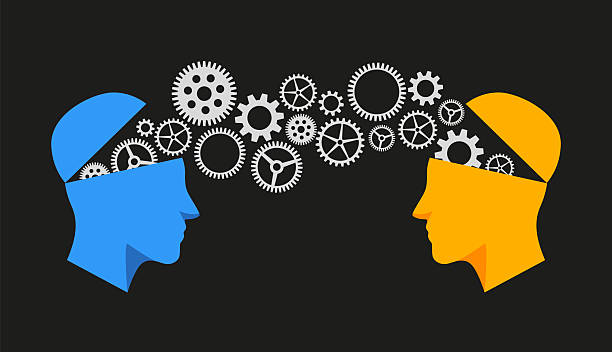
Hill believed that when two or more minds come together with a common purpose, a third mind—a “Master Mind”—emerges. This is not a mystical concept, but rather a psychological and energetic phenomenon: the combined creative power of multiple individuals working in harmony generates ideas, motivation, and accountability far beyond what any individual can produce alone.
This idea is now supported by modern research in social cognition, group dynamics, and collective intelligence (Woolley et al., Science, 2010), which demonstrate that groups with high levels of social sensitivity and balanced participation significantly outperform individuals on complex problem-solving tasks.
The Psychology and Function of a Mastermind
At its core, a mastermind functions as a collective growth engine. It combines three fundamental psychological principles:
- Synergy – The output of the group exceeds the sum of its parts.Research in psychology and organizational theory supports the idea that collaborative groups generate emergent intelligence beyond individual contribution. Gestalt psychology first described this phenomenon as “the whole is greater than the sum of its parts” (Koffka, 1935). Later, group productivity studies (Steiner, 1972) and research on collective intelligence (Woolley et al., 2010) confirmed that groups with balanced participation and trust consistently outperform their most capable members. Through shared learning (Bandura, 1977) and creative collaboration (Paulus & Nijstad, 2003), ideas don’t just add up—they evolve, multiply, and mutate into insights no one could reach alone. In this sense, a mastermind becomes a dynamic system of innovation, where interaction itself is the catalyst for transformation (Nonaka & Takeuchi, 1995).
- Accountability – Members commit publicly to their goals and progress.
This social contract leverages the human need for consistency and integrity, as described by Robert Cialdini in Influence (1984). We’re more likely to follow through when others are watching and expecting results. - Shared Perspective – Each member sees blind spots others can’t. Research in social and cognitive psychology shows that individuals often overlook their own assumptions and biases (Tversky & Kahneman, 1974; Wilson & Dunn, 2004). Within a psychologically safe group environment (Edmondson, 1999), honest peer feedback reveals those hidden perspectives—what Luft and Ingham (1955) described in their Johari Window model as the “blind area.” In this way, a mastermind acts as a mirror: a structured feedback loop that reduces bias, sharpens decision-making (Koriat, 2012), and expands self-awareness through collective intelligence (Woolley et al., 2010).
In short, a mastermind isn’t just about advice—it’s about mental leverage. It multiplies your perspective, discipline, and creativity by engaging other capable minds in your journey.

The Purpose and Benefits of a Mastermind
Why join—or create—a mastermind? The benefits go far beyond business networking or professional camaraderie. They touch on personal evolution, leadership growth, and strategic clarity.
Here are some of the most documented and observable outcomes:
A. Accelerated Growth
You gain access to decades of collective experience condensed into one table. What might take you five years to learn through trial and error can be learned in five weeks of shared discussion.
Accelerated Growth → Social Learning & Vicarious Experience
Bandura, A. (1977). Social Learning Theory. Englewood Cliffs, NJ: Prentice-Hall.
showed that individuals learn more rapidly when observing and modeling others’ behaviors and outcomes—what masterminds facilitate through shared experience and case exchange.
B. Unfiltered Feedback
Unlike friends or colleagues who may sugarcoat the truth, mastermind peers are committed to your progress, not your comfort. Constructive honesty becomes a gift.
Unfiltered Feedback → Constructive Feedback and Performance
Kluger, A. N., & DeNisi, A. (1996). The effects of feedback interventions on performance: A historical review, a meta-analysis, and a preliminary feedback intervention theory. Psychological Bulletin, 119(2), 254–284.
This meta-analysis demonstrated that timely, specific feedback significantly improves performance when focused on behavior and growth—exactly the environment masterminds create.
C. Accountability that Drives Action
Publicly declaring your commitments creates pressure—but the good kind. It fuels consistent action, a cornerstone of success.
Accountability that Drives Action → Public Commitment & Goal Achievement
Cialdini, R. B. (1984). Influence: The Psychology of Persuasion. New York: Harper Business. Cialdini’s principle of commitment and consistency explains that once people make public commitments, they are far more likely to follow through—a key accountability mechanism in mastermind groups.
D. Expanded Thinking and Creative Problem Solving
The diversity of viewpoints helps you think laterally, breaking free of habitual thinking patterns.
Expanded Thinking and Creative Problem Solving → Group Creativity
Paulus, P. B., & Nijstad, B. A. (Eds.). (2003). Group Creativity: Innovation through Collaboration. New York: Oxford University Press.
Empirical studies summarized in this volume show that well-facilitated collaboration enhances divergent thinking and idea generation—core to how masterminds broaden perspective.
E. Emotional Support and Resilience
Entrepreneurship and leadership can be lonely. A mastermind provides connection, empathy, and perspective during setbacks.
Emotional Support and Resilience → Social Support and Stress Buffering
Cohen, S., & Wills, T. A. (1985). Stress, social support, and the buffering hypothesis. Psychological Bulletin, 98(2), 310–357.
This paper demonstrated that social support systems reduce stress and improve psychological resilience—mirroring how masterminds provide empathy and encouragement during challenges.
F. Exponential Networking
Members often collaborate, exchange referrals, or create joint ventures. The “network effect” of high-trust relationships can multiply your influence and opportunities.
Exponential Networking → Social Capital and Network Effects
Burt, R. S. (1992). Structural Holes: The Social Structure of Competition. Cambridge, MA: Harvard University Press.
Burt’s research on social capital shows that diverse, high-trust connections create information advantages and opportunity flow—precisely what emerges from collaborative mastermind relationships.
How a Mastermind Is Structured
While there’s no one-size-fits-all model, most effective masterminds share several key structural components:
1. Size
Ideal groups range from 5 to 10 members. Too few and diversity suffers; too many and intimacy and accountability weaken.
2. Membership
Members are carefully selected for complementary experience and shared values. The magic lies in diversity of thought with unity of purpose.
3. Frequency
Most groups meet weekly or biweekly. Regularity is crucial—consistency breeds trust, rhythm, and momentum.
4. Format
A typical 90-minute session follows a structure like:
- Opening Wins (10 min): Each member shares a quick success or insight.
- Hot Seats (60 min): One or two members present a current challenge; the group brainstorms solutions.
- Commitments (15 min): Each member states their next action step before the next meeting.
- Closing Reflection (5 min): Summary and positive reinforcement.
5. Leadership
Strong facilitation keeps discussions focused, equitable, and productive. The facilitator (or coach) ensures each member receives value while maintaining psychological safety and direction.
6. Ground Rules
Every mastermind should establish:
- Confidentiality
- Respectful communication
- Preparedness and punctuality
- Full participation and accountability
These create the container in which trust—and transformation—can flourish.

The Conceptual Foundation: “The Third Mind”
One of Hill’s most profound insights was that a Mastermind generates something greater than the individuals within it—a sort of group consciousness or “third mind.”
Modern neuroscience offers parallels to this concept.
When people collaborate deeply, their brains literally synchronize—a phenomenon known as “inter-brain coupling.” (Dikker et al., Neuroscience & Biobehavioral Reviews, 2021).
In this state, ideas flow freely and creative energy compounds. It’s not mystical; it’s neuropsychological. The third mind is the emergent intelligence that arises from alignment, trust, and shared purpose.
The Evolution of Masterminds in the Modern Era
Today, masterminds are everywhere—from private entrepreneur circles to executive leadership groups to virtual communities.
Prominent modern examples include:
- John Maxwell Team Masterminds – Focused on leadership development and personal growth.
- Vistage – Peer advisory boards for CEOs and executives.
- EO (Entrepreneurs’ Organization) – Forums built around confidentiality and deep personal sharing.
- Strategic Coach by Dan Sullivan – Groups for entrepreneurs focused on freedom, growth, and systems thinking.
- Tony Robbins’ Platinum Partners – High-level peer masterminds centered on wealth, business, and personal transformation.
Despite variations in focus and structure, all share the same DNA: a small group of growth-oriented individuals meeting regularly to elevate each other’s thinking and outcomes.
How to Form Your Own Mastermind
If you’re ready to start one (or join one), here’s a roadmap:
Step 1: Define the Purpose
Decide what your mastermind exists to achieve. Is it business growth? Leadership development? Personal transformation?
Clarity of purpose shapes the culture.
Step 2: Identify Ideal Members
Look for people who:
- Have comparable ambition and integrity
- Are action-takers, not complainers
- Bring unique strengths to the table
- Value confidentiality and contribution
Avoid groups of clones. Diversity fuels innovation.
Step 3: Choose the Format
Decide on the logistics:
- Virtual or in-person?
- Weekly, biweekly, or monthly?
- How long are meetings?
- Who facilitates them?
Consistency beats intensity. A sustainable cadence keeps the mastermind alive.
Step 4: Establish Rules and Expectations
Draft a brief agreement covering confidentiality, attendance, participation, and financial commitment (if any).
Treat it like a partnership.
Step 5: Set an Agenda Template
Predictability creates psychological safety. Most groups thrive with:
- Wins
- Challenges
- Hot seat(s)
- Commitments
- Closing reflections
Step 6: Create Momentum
Start small, learn as you go, and celebrate early wins.
Masterminds mature with time, trust, and shared breakthroughs.
Supporting Literature and Research
A number of academic and practical sources now validate what Hill intuited nearly a century ago:
- Napoleon Hill, Think and Grow Rich (1937) – The original articulation of the Master Mind principle.
- Napoleon Hill, The Law of Success (1928) – Earlier, more extensive discussion of collaborative intelligence.
- Stephen Covey, The 7 Habits of Highly Effective People (1989) – Habit #6, “Synergize,” echoes Hill’s Master Mind principle.
- Robert Cialdini, Influence (1984) – The psychology of commitment and consistency underpins mastermind accountability.
- Daniel Goleman, Emotional Intelligence (1995) – Self-awareness and empathy are critical to healthy group dynamics.
- Harvard Business Review (Woolley et al., 2010) – Research demonstrating the “collective intelligence factor” that predicts group performance.
- Tuckman’s Stages of Group Development (1965) – “Forming, Storming, Norming, Performing” describes how mastermind groups evolve through phases toward peak performance.
- Amy Edmondson, The Fearless Organization (2018) – Shows how psychological safety drives learning and innovation—vital for any mastermind culture.
These works collectively reinforce that the mastermind principle is not only motivational—it’s scientifically grounded.
Why Masterminds Work So Powerfully
If we distill it all down, masterminds work because they engage every major driver of human achievement:
- Social drive (belonging, connection, validation)
- Cognitive drive (learning, problem-solving)
- Emotional drive (accountability, resilience, empathy)
- Purpose drive (clarity of goals, shared vision)
When these forces align, people experience a state of flow, described by psychologist Mihaly Csikszentmihalyi as “complete absorption in meaningful activity.”
In that state, progress feels natural, momentum builds, and transformation becomes inevitable.

The Power of Book-Based Masterminds
An increasingly popular—and profoundly effective—variation is the book-based mastermind.
At first glance, this may sound like a book club. But it’s not.
A book club discusses ideas.
A book-based mastermind applies them.
The distinction lies in intention and execution. In a book club, participants share interpretations. In a mastermind, participants implement the book’s principles into their businesses, leadership, and lives—and use the group as an accountability engine to make real changes.
How It Works
- The group chooses a foundational text (e.g., Think and Grow Rich, Atomic Habits, The 7 Habits of Highly Effective People, Leaders Eat Last, The 12 Week Year, 15 Invaluable Laws of Growth.)
- Each session focuses on one chapter or concept, not for discussion alone, but for application:
- What does this principle mean in my context?
- How can I apply it this week?
- What results did I observe since the last session?
- Members share progress, obstacles, and insights—transforming theory into practice through real-world feedback.
Why It Works
- Focused Curriculum: The book provides a shared framework, keeping sessions structured and meaningful.
- Deep Integration: Participants go beyond reading—they embody the lessons.
- Compound Learning: Each person’s application fuels group learning.
- Ongoing Accountability: Members commit to measurable actions between sessions.
This model has been used by John Maxwell Team coaches, Vistage facilitators, and leadership trainers worldwide because it fuses guided learning with peer-driven accountability—a blend that accelerates mastery.
Example: A Think and Grow Rich Mastermind
Each week, members explore a chapter—“Desire,” “Faith,” “Autosuggestion,” “The Master Mind,” “Persistence”—and translate those ideas into actionable goals. One week, you might write your personal “Definite Major Purpose.” Another, you’ll share how you’ve applied autosuggestion to reinforce belief and momentum.
By the end of the series, participants don’t just understand the book—they live it.
That’s the power of a book-based mastermind: structured transformation anchored in timeless wisdom.
Conclusion: The Collective Path to Growth
The Mastermind Principle reminds us that success is never a solo act. Every great achievement—whether in science, business, or art—emerges from collaboration, challenge, and shared purpose.
Napoleon Hill stated that no single mind, however brilliant, can match the power of many minds working in harmony toward a definite goal.
In a world where isolation and distraction dominate, masterminds are sanctuaries of focus, connection, and growth. They are laboratories for leadership and catalysts for exponential progress.
And when combined with a great book—a powerful idea crystallized in print—they become something even more potent: a living laboratory of applied wisdom.
So if you’ve ever felt stuck, plateaued, or hungry for deeper growth—maybe it’s not more information you need. Maybe it’s a mastermind: a place where your ideas are sharpened, your limits are tested, and your vision is expanded by others walking the same path.

Abe Jarjoura D.D.S, M.S.
abejarjoura.com Love/Learn/Lead
Founder: Dental care Team Group
 Control "Freaks"
Leave a comment