“Make your vision so clear that your fears become irrelevant”
Kerwin Rae
Introduction
Creating a vision for your dental practice ( or any other business) is extremely important in alleviating any confusion and doubt you may encounter in the management of your enterprise.
Once you have a clear vision of where you’re going and what you want to accomplish, things will start ” opening up.” You simply need to follow the blueprint while utilizing your purpose and core values as the vehicles on which you will ride over the “finish line.”
Of course, there is no true finish line. It will keep moving and changing as you evolve and grow.
In this article I list 10 rules you have to be aware of, and utilize in forming and adjusting your vision;
Define your Mission
Clearly define the purpose and goals of your practice. What are you trying to achieve and why? Get clear on why you exist and what is it you are trying to accomplish.
2. Look to the future
Consider what you want your business to achieve in the long term, and create a vision that reflects those aspirations.
3. Get input from stakeholders
Involve key stakeholders such as employees, patients, and partners in the process of creating a vision for your practice. Their input may provide valuable perspective and insight.
4. Be specific and measurable
Make sure your vision is specific and measurable so you can track your progress and make adjustments as needed.
5. Make it inspiring
Create a vision that inspires and motivates your team and stakeholders. It should make them enthusiastic and ready to do whatever needs to be done to achieve that vision.
6. Align it with your values
Make sure your vision aligns with the core values and purpose of your practice. Of course, a prerequisite to that is that you have already fleshed out and articulated your purpose and core values and all of the employees know them by heart. After all, that is how you avoid the chaos of running a busy practice.
7. Communicate it clearly
Once you’ve created your vision, make sure to communicate it clearly to your team and stakeholders, and ensure that everyone is on board and understands their role in making it a reality.
8. Review and revise
Review and revise your vision regularly to make sure it remains relevant and achievable. Also, to make sure that you are still on the right path towards achieving the vision.
9. Use it as a guide
Use your vision as a guide to make decisions and set goals for your business.
10. Bring it to life
Create a plan of action to bring your vision to life and ensure that everyone is working towards the same goal.
Conclusion
The main thing is to realize the need for a vision for your business. You should have a short term vision ( a year) a medium term vision ( 5 years) and a long term vision ( 10 years.)
A vision has to be articulated, understood, agreed upon and with that, it can guide your actions.
Depending on its length of time, the vision document has to be reviewed periodically ( yearly in the case of the long term vision,) and any adjustments have to be made to it then.
If the vision is well crafted, minimal to no changes will be needed and it will simply be utilized with possible minor tweaking.
At a minimum, it will increase the sense of control over your practice.
Abe Jarjoura D.D.S., M.S.
Founder: Dental Care Team Group
Founder: Control “Freaks”- A Group for Dentists Who Want to Smile More
The years keep marching on and as they move, our bodies seem to be getting stiffer and stiffer. We are not as limber as we used to be which contributes to increased propensity to injury, discomfort, and lack of mobility. The decreased mobility increases the propensity to stiffness which in tern decreases mobility, and so on and so on.
Practicing dentistry for many years, as I have done, can be stressful on your muscles and posture. You find yourself contorted in many ways which are detrimental to your general well being.
The placement of everything in the treatment room, aka ergonomics, has to take into consideration the position of your body; your back, your head, your neck, etc. in order to maximize the efficiency in motions and minimize the harmful effects of stress on your body.
There are many devices that help with that; different chair and stool designs to keep your legs in the ideal position. Loops to decrease the need to bend and twist in order to visualize the operating field correctly, and patient chairs that position the patient’s head in ideal positions for efficient treatment.
All are good innovations based on continuous research in Kinesiology and ergonomics , but it seems that one of the best ways to prevent injury and reduce pain while increasing your well being is improving your flexibility and staying limber. Some ways to do that include the following:
1. Stretching
There are multiple techniques for stretching that target different parts of the body. Stretching in the morning when the muscles are ” cold” is essential for a strong day. It increases blood flow into the muscles and gets them primed for the day’s physical activity. A study published in the Journal of Sports Rehabilitation found that stretching improved the flexibility in the hamstrings, flexors and shoulders. Another study in the Journal of Athletic Training found that stretching reduced pain in people with knee arthritis.
2. Yoga
Yoga can help increase flexibility and balance, as well as improve breathing and overall body strength. A study published in the Journal of Geriatric Physical Therapy found that a 12 week yoga intervention improved muscle strength and balance in older adults. Also, a review of studies published in the Journal of Pain found that yoga was effective in reducing chronic low-back pain.
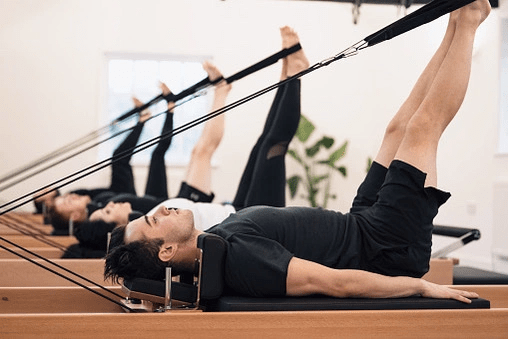
3. Pilates
Pilates can help improve flexibility, core strength, and balance. A study published in the Journal of Osteopathic and Sports Physical Therapy found that a 12-week Pilates intervention reduced lower back pain in adults. A study published in the Journal of Bodywork and Movement Therapies found that regular Pilates practice improved posture in healthy adults.
4. Dynamic Stretching
Dynamic Stretching which involves moving the body through a full range of motion can help improve flexibility. A study published in the Journal of Strength and Conditioning Research found that Dynamic Stretching improved flexibility in collegiate athletes. In addition, a study published in the Journal of Sports Science and Medicine found that a Dynamic Stretching routine improved range of motion in the shoulder joint.
5. Foam Rolling
Foam Rolling can help to release tight muscles and improve flexibility. A study published in the Journal of Sports Rehabilitation found that foam rolling improved the flexibility in the hamstrings, quadriceps, and iliotibial band. Also a study published in the Journal of Athletic Training found that foam rolling improved blood flow to the muscle after intense exercise.
6. Barre Classes
Barre Classes can improve flexibility, balance and core strength. This is a form of exercise that combines elements of ballet, yoga and pilates. A study published in the Journal of Sports Rehabilitation found Barre classes to be effective in improved posture in healthy adults. It also found Barre classes to be effective in reducing weight, improving muscle endurance and improved flexibility in the hamstrings, hip flexors and shoulders.
7. Body Weight Exercise
Body Weight exercises such as squats, lunges and pushups can help improve flexibility. Here, you use your body weight as resistance. A study published in the Journal of Physical Therapy Science found that a body weight training program improved flexibility in older adults. It also found that balance was improved in the same older adults.
8. Swimming
Swimming can improve flexibility, balance and overall body strength. It’s a form of aerobic exercise that benefits the swimmer for various health conditions. The Journal of Sports Medicine and Physical fitness published a study revealing that regular swimming improved muscle strength in older adults. It also showed that flexibility improved in those same adults.
9. Calisthenics
Calisthenics can help improve flexibility, balance and overall body strength. It’s a form of exercise that uses your body weight as resistance. It can be pushups, squats, or pull ups. The Journal of Strength and Conditioning published a study revealing that Calisthenics exercise was effective in reducing body fat and body weight in healthy adults, and also reported that calisthenics reduced the risk of injury in older adults and improved their flexibility.
Of course, there are other ways to improve flexibility and strength. Those can include gymnastics and even Ballet.
Conclusion
Most likely, a combination of what was mentioned above would give the best results for your body and mind, but implementing only one, on a consistent basis, can provide fantastic results.
A patient of mine who happened to be a personal trainer told me once: ” we don’t get stiff by getting old, we get old by getting stiff.”
Getting old is a part of life ( if we are lucky of course.) Practicing dentistry for many years, can be rewarding, both mentally and financially.
If we want to practice for a “while”, it behooves us to take care of our muscles and skeleton by keeping them flexible.
Abe Jarjoura D.D.S., M.S.
Founder: Dental Care Team Group
Founder: Control “Freaks”- A Facebook Group for Dentists Who Want to Smile More
a successful result in a contest, conflict, bet, or other endeavor; a victory.”a win against Norway”Similar: victorytriumph
In an article published in the Harvard Business Review in May 2011 entitled “The Power of Small Wins” Teresa M. Amabile and Steven J Kramer argue that the power of progress is fundamental to human nature, but few managers understand it or know how to leverage progress to boost motivation.
They state that in a survey asking about the keys to motivating workers, they found that some managers ranked recognition for good work as most important, while others put more stock in tangible incentives.
Some focused on the value of interpersonal support, while still others thought clear goals were the answer. But interestingly, very few of the managers surveyed ranked progress first.
In an analysis of knowledge workers’ diaries, the authors found that nothing contributed more to a positive inner work life (the mix of emotions, motivations, and perceptions that is critical to performance) than making progress in meaningful work. If a person is motivated and happy at the end of the workday, it’s a good bet that he or she achieved something, however small. If the person drags out of the office disengaged and joyless, a setback is likely to blame.
Amabile and Kramer in that same article stated that when we think about progress, we often imagine how good it feels to achieve a long-term goal or experience a major breakthrough. These big wins are great—but they are relatively rare. The good news is that even small wins can boost inner work life tremendously.
And many of the progress events the research participants reported represented only minor steps forward. Yet they often evoked outsized positive reactions
According to Oxford, as mentioned above, a win is a successful result. Whether professional or personal, big or small, it still is a successful result in something and warrants sharing with other members of the organization.
At Dental Care Team Group we have multiple meetings; morning huddles, Sync meetings that are conducted every week and include members of the management and executive team. We have a monthly sales or treatment coordination meeting, and we also have quarterly meetings for the whole staff together.
Each meeting has its goals and objectives, but they all have one thing in common; they all start with reciting some wins.
Starting the meetings by celebrating wins is a great way to set a positive tone right from the start. We encourage each attendee to share one win from the last week, whether it’s work or non-work related.
Celebrating these wins together can serves as a bonding experience with the team members and helps form relationships.
Team work
In an article in Forbes titled “12 Smart Strategies For Celebrating Your Team’s Wins” the authors state that recognizing both the large and smaller accomplishments of teams and individuals encourages them to continue to strive and reminds them that leadership values their contributions.”
Prioritizing the celebration of wins together can foster a culture of recognition remembering that team members appreciate many different ways of receiving recognition and the leaders should drive recognition and celebrate wins in creative ways outside of using a formal program.
So this is how to change meetings into something that people look forward to attending: Recognize and let people acknowledge the “wins” in their lives.
Once this is done at every meeting, people will come with the anticipation of sharing what they just did, whether personal or work related and they will say what they are excited about.
This can change meetings from being this thing that people dread and think are wasted time killers to making them productive, exciting and a great experience for every member of the team,
The Harvard researchers pointed out at the beginning that having and sharing those wins will lead to continued progress in the business and increased satisfaction in work performance by the whole team.
What manager doesn’t want that?!
Abe Jarjoura D.D.S., M.S.
Founder: Dental Care Team Group
Founder: Control “Freaks”- A group for dentists who want to smile more
“When you arise in the morning, think of what a precious privilege it is to be alive – to breathe, to think, to enjoy, to love.”
Marcus Aurelius
My morning routine determines how I react to the unfolding of my day. I have no control over what the day brings, but I can have control over how I react to it, and that is in how I set my mind and the plan.
Morning routines or habits get your day going, and the “going” starts before you shut your eyes to go to sleep. To set yourself for a good morning routine, you have to set your self up for a good night of sleep.
I hope you noticed that what I am talking about has the word ” habit” or “routine.” We can do anything once, twice, three times….. and then we get bored, distracted, uninterested and the whole thing falls apart.
For us to succeed in starting our days on the right foot, we have to do what ” needs” to be done REPEATEDLY. It has to become a habit.
Of course, like pretty much everything in life, this has so many things that influence it. All of our interactions with others, the news we just heard, our health and well being, our financial situation, whether we had a fight with our spouse, what our boss told us, etc. etc.
All of life and what it throws at us has to be confronted and handled, otherwise, we get into a constant state of upset.
Having said that, I want to concentrate on five practical “things” I practice every morning to set the day right and they are mental as much as they are physical!
If I’m a mess in the morning, I feel like I spend the rest of the day trying to catch up. If I am able to be intentional about my mornings, though, the rest of my day tends to go more smoothly as well. Because of this, I’ve developed a little “morning routine checklist” to help me stay on track. Everyone will have a different morning routine that works for them, their circumstances, and their stage of life, but I thought I’d share what’s working for me these days– I know I’m always interested to know what’s working for other people!
My Morning Routine; Organizing My Morning for a More Productive Day:
1. Keep my phone somewhere other than on my nightstand.
Big one!
In the past, I used to be glued to my phone while in bed. To wind down, at night, before falling asleep, I would spend some time on FB or Tik Tok. I would numb my mind strolling through absolutely useless posts ( as entertaining as it may have been.)
As we may have heard by now, the screen and its light interferes with our circadian rhythm in our brain which will interfere with our sleep time. At a minimum, we get less hours of rest and at a maximum, less hours of sleep AND much worse quality.
In the morning, as I open my eyes, I would simply extend my arm and grab the phone sitting on the night stand. I would go through the news sites and FB and Youtube trying to catch up with all of the “earth shattering” events that took place while I was sleeping. I would spend an hour, just laying in bed doing something similar to what I did right before sleeping. And then I would jump out of bed in a panic since one more minute of bed time will mean getting to work late.
I would like to think of myself as a man of action, decision maker and smart. Well, I was no match to the smart phone. It proved to be too strong of a temptation and It won every single time. I simply had to get away from it.
To break this habit, I began plugging in my phone somewhere other than by my bed. I usually keep it at the very least plugged in on the other side of our bedroom where I couldn’t reach it from the bed.
Now, to shut the alarm, I HAVE TO GET OUT OF BED, and usually that is at 5:00 AM
2. Set a positive focus from the start.
When my alarm goes off, I quickly put on my workout clothes and head into my meditation space. I sit on a big comfortable cushion that I placed on the floor, and in that comfortable nook I start out my day by setting a positive focus.
For me this means prayer/ gratitude. I thank GOD for all of the blessings that I have in my life- my children, my wife, my health, my accomplishments, my career, my home, my travels, my finances and all that I have attained and have been blessed with.
I follow that with twenty minutes of meditation. For me, quiet meditation to clear my mind, and to open it for all the events that the day will bring works best and makes me feel the most fulfilled and energized.
It’s 5:30 AM now.
3. Have a plan for the day.
I sit down at my desk and “brain dump” all of the goals I could think of. I simply write all of the goals and tasks that I feel need to be accomplished that day.
Sometimes, it takes a little bit of time for the information to travel from my brain down to my computer, but eventually it always comes.
Going through that exercise, I assign categories to my goals and determine their importance and urgency which determines whether they get done and when.
It also creates clarity in regards to the goals and tasks that are completely unimportant and do nothing to advance my day forward, so they get deleted. That alone opens up my schedule and is worth the exercise.
I block time for the tasks that I decide to do and usually just use a simple calendar that is found on all iPhones to stay on track.
It’s 6:00 AM
4. Get moving.
Now, it’s time to get moving.
I try to mix it up a bit, with concentration on flexibility and health.
My routine consists of Yoga on some days. Perfect for flexibility. That usually takes an hour.
Other days, I do a cardio workout involving a brisk walk/ jog followed by lifting weights or body weight resistance. That also takes an hour.
Now, it’s 7:00 AM.
5. Feed my brain.
Often, when I am jogging or doing resistance, I listen to an audio book, a podcast or a Youtube video. What a great time to catch up on a subject you are interested in or get some training in.
Even though , I generally dislike and discourage multitasking, in this case I find it to work real well; work out + learn something new at the same time!
6. Feed my belly.
After I’m done working out, I head straight to the kitchen to make breakfast.
Usually, it involves protein ( eggs).
Often, oat meal is involved. No sugar added! only some berries and some almonds. I try to avoid dairy, so the milk I use is either oat milk or almond milk.
Fruits such as berries, citrus, apples, Kiwi, bananas, or what ever is reasonably priced at the grocery store is involved.
I usually avoid bread and coffee as much as possible.
To increase my body alkalinity ( a good thing,) I usually drink a cup of warm water with some lemon juice in it.
I am a creature of habit, so I typically have a combination of what was mentioned above.
7:30 AM
7. Final act before facing the day.
Make the bed. This way I reinforce my sense of “accomplishment” since it symbolizes the completion of a cycle of action ( not to mention that THE BED IS MADE.)
Shower, groom and get dressed. To cut down on the time commitment, I usually have my clothes laid out from the night before and ready for me when I’m done cleaning up.
Now, I’m ready for the day. Bring it on!
It’s 8:00 AM
Abe Jarjoura D.D.S., M.S.
Founder: Dental Care Team Group
Founder: Control “Freaks”- A Group for Dentists who Want to Smile More
“I have two kinds of problems, the urgent and the important. The urgent are not important, and the important are never urgent.”
Dwight D. Eisenhower
I am very busy! My life is full! Sometimes, the number of things that I have to do in a day could be overwhelming causing me to stop in my tracks and do nothing for a period of time. I don’t really have to mention the negative effect that would have on my productivity and attainment of any goals. Talk about sapping energy and reducing fulfillment.
Should I call the airline to schedule my flight? should I answer my emails? Which emails should I answer? How about writing the article or recording the video to send to the team? Should I workout? Should I cook dinner? Should I sort through the junk mail? and on, and on, and on……….
I remember complaining to a friend and business coach of mine about the “lack of time” available to accomplish all that I wanted to accomplish. You know the ” joke” that we need 25 hours in the day. He said: ” Do you know how many things the president of the United States has to accomplish in a day?” ” Do you think you have more to accomplish than he does?” My answer was ” no, of course.” He retorted sarcastically ” you know he also only has 24 hours per day.”
Sticking with the president of the United States, let me tell you about one who accomplished enough for three life times- Dwight Eisenhower.
Eisenhower was the 34th President of the United States, serving two terms from 1953 to 1961. During his time in office, he launched programs that directly led to the development of the Interstate Highway System in the United States, the launch of the internet (DARPA), the exploration of space (NASA), and the peaceful use of alternative energy sources (Atomic Energy Act).
Before becoming president, Eisenhower was a five-star general in the United States Army, served as the Supreme Commander of the Allied Forces in Europe during World War II, and was responsible for planning and executing invasions of North Africa, France, and Germany. At other points along the way, he served as President of Columbia University, became the first Supreme Commander of NATO, and somehow found time to pursue hobbies like golfing and oil painting.
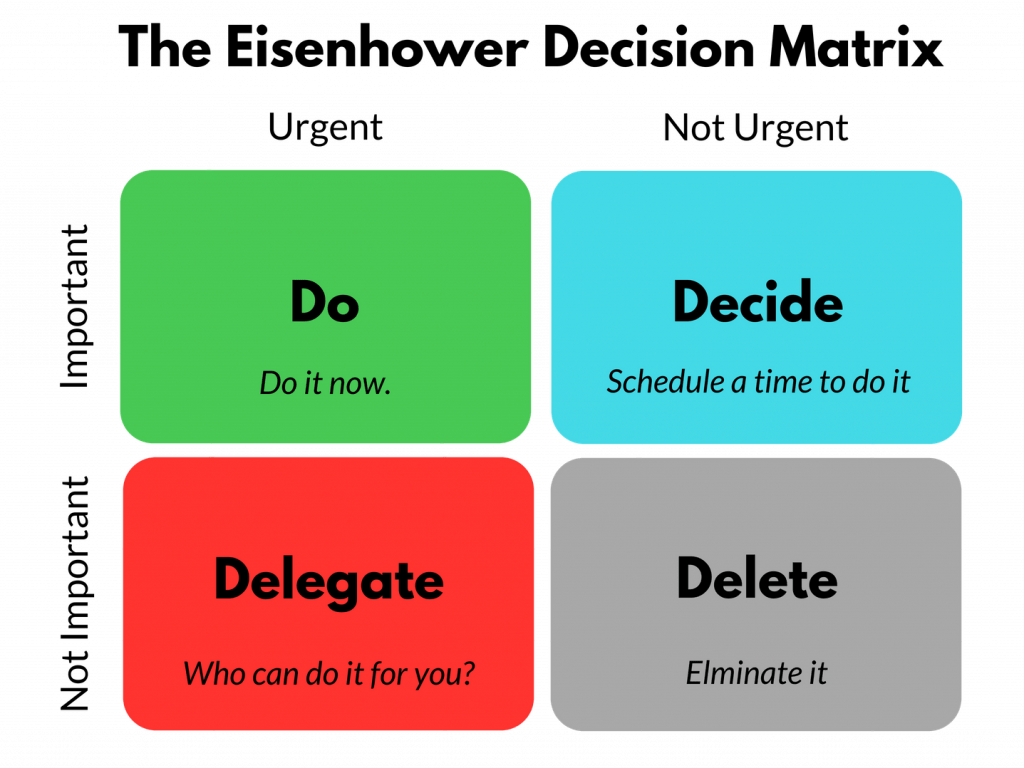
He had a productivity strategy that became known as the Eisenhower Box (or Eisenhower Matrix) and it’s a simple decision-making tool that we can all use.
Similar to Eisenhower, we can divide our tasks into four different priority categories as follows:
1. Important – urgent = Do it now
2. Important – not urgent = Decide a time to do it
3. Urgent – not important = Delegate it
4. Not urgent – not important = Delete it
Obviously, this is a great visual organizing tool that allows us to assign priority to tasks and action before us so that we can accomplish an ever increasing number of IMPORTANT tasks.
However, in my opinion, the most important quadrant of this matrix is the one on the lower right side- DELETE!
“There is no code faster than no code.”
Kevlin Henney
That was a quote about computer coding basically stating that having a computer read a line of code would always be slower than not having code at all. In other words, the fastest way to do something is not to do something at all.
Of course, that is not to say that being lazy is the best path to take. All it says is that instead of getting bogged down in tasks, regardless of their effect on whatever outcome we seek, we should learn how to eliminate the ones that have little or no effect. The more we are able to delete off of our plate, the more energy we can devote to the tasks that get us results and the quicker we can attain our goals.
The Eisenhower Matrix isn’t a perfect strategy, but It can be a useful decision-making tool for increasing one’s productivity and eliminating the behaviors that take up mental energy, waste time, and rarely move anyone toward their goals.
I hope you’ll find the Eisenhower matrix a useful tool to add to your productivity tool box allowing you to constantly accomplish tasks that move you ever closer to attaining your goals.
Abe Jarjoura D.D.S., M.S.
Founder: Dental Care Team Group
Founder: Control “Freaks”- A Group for Dentists who Want to Smile More
Betty Withrow wrote a book called “The Essential Excuse Handbook.” Reading the book gave me the idea to write a series of blogs dealing with the excuses we use to keep us from doing anything.
Excuse #1: “I might look like an idiot.”
Fear of being laughed at. Fear of looking like a clown. Fear of being considered a silly person. They will laugh at me… They will probably ridicule me… They will snicker behind my back…. They will lose whatever respect they had for me…..Ahhhhhhhhhhhhhhh!
“I don’t know what I’m talking about.” “If I go in front of an audience I will pee my pants.” “At a minimum, I will mumble like a fool!”
” I can’t ask her out. Look at her. She’s gorgeous. Way out of my league. She will shoot me down like a rocket with no fuel, and once my friends find out ( let alone my enemies), watch out. I will be laughed out of town.”
Well, there are no guarantees in life except for one I can give right now: “If you don’t enter the game, you will not win!”
Can’t guarantee that you will win if you’re in, but I do guarantee that you won’t if you’re not.
In life, you either get results, or you give excuses.
So, let them laugh, let them ridicule, let them snicker. Gather up your courage and “do”. You get what you want, great. You don’t, great!
You just might end up being the one laughing all the way to the bank.
Abe Jarjoura D.D.S., M.S.
Founder: Dental Care Team Group
Founder: “Control Freaks”- A group for dentists who want smile more
Productivity, of course, is related to time. The more productive a person is, the more he or she can produce within a certain period of time.
The more productive you are, the more time you have. So what is the hack for productivity?
It is figuring out the result you need from the task at hand and concentrating on that task until it is finished before you go on to the next one.
I have news for you: The idea of multitasking to provide a large number of results within a period of time is a false.
You will probably produce a bunch of half baked results, ones that are of compromised quality, while at the same time you feel completely exhausted and overwhelmed, and who wants that? ( Rhetorical question, of course.)
When you are doing a bunch of tasks all at once, there will be a time in the middle where all or the majority of those tasks are being worked on at the same time. They are in “mid air” somewhere, and you have a bunch of them to do.
Think back to times when you had some unfinished business that you knew had to be done. How did you fee? Stressed out I bet.
Now remember how you felt when those tasks were finished and put to bed. How did that make you feel? Relieved? Like a weight came off of your shoulders? Happy? Accomplished?
You want that feeling? ( Again rhetorical), then finish the job, and you will get that sense of accomplishment all day long.
Let’s take a simple task ( and here I’m going to simplify it to silliness.)
Imagine that you are sitting at a table and there’s a pen on it.
The task is to move the pen from your left side and place it back on the table to your right.
The task can be broken to three simple steps: You pick up the pen, raise it in the air, and then place it back on the table. There, the task is finished.
Now, imagine that while you are holding the pen in the air, ( in the process of transporting it)your phone alerts you to an email you just received.
Well, you have to find out what the email is, so you use your other hand and click on the email and start reading it ( now you are doing two things together and neither one is finished.)
While you are holding the pen in the air, in the process of transporting it, and in the process of reading your email, your young daughter comes into the kitchen asking you where the peanut butter jar is.
You start wanting to tell her where it is while doing the other things……………STRESS! Nothing is accomplished. All in the middle.
Now imagine:
You took the pen, moved it and placed it on the right. Done..Ahhhh
then you opened your email, read it, and (hopefully) moved it to the trash…. Complete… Ahhhh
then you answered your daughter by telling her where the peanut butter jar is. She goes and gets it. Finished…. Ahhhhhhh.
That is the secret. That is how you accomplish so much; one task at atime. NOT ALL OF THE TASKS AT ONCE.
Let’s take that to the office:
You arrive in the morning, where you turn on your computer and immediately start reading the emails. You finish the first email and move it to the trash, you do the same to the second and third, then as you are reading the fourth, your coworker comes into your office with a very important question about how to turn on the new coffee maker since it doesn’t seem to be working.
Of course, you being the nice person that you are, leave the email you were reading to help with the emergency of no coffee. As that is happening, the receptionist informs you that Mrs. jones is on the phone and she wanted to talk to you, so you immediately leave what you were doing, and jump to the nearest phone.
I’m stressed just writing this!
Then, you have to go back to your emails when you can, but you forgot which email you were working on or where you where in its handling, so you have to repeat the process; something that could have taken you five minutes is now taking you ten.
Time is churning. It’s being eaten away. You are doing things twice instead of once.
I understand that certain tasks may be too big to start them and not leave them until done.
Well, in that case, you break those tasks to several smaller sections. You chunk them.
Start with the first small chunk and don’t stop until it is finished. Do not go to anything else until that chunk is finished. Then you are free to start another task, and so on and so forth.
Never touch anything unless you know you can finish it. Do not open the email unless you know you are going to take it all the way to completion.
With handling tasks, starting on them, moving through the process and taking them into completion, you accomplish and produce so much and in the process, you create time.
Abe Jarjoura D.D.S., M.S.
Founder: Dental Care Team Group
Founder: Control “Freaks”- A group for dentists who want to smile more
“The figure a poem makes. It begins in delight and ends in wisdom… in a clarification of life – not necessarily a great clarification, such as sects and cults are founded on, but in a momentary stay against confusion.”
Robert Frost
The feeling we call confusion is produced in our minds when we simply don’t know what to do or what path to take. We have a bunch of conflicting thoughts and we seriously entertain each of those as if they were helpful or important.
Should I? Should I not? Is it good for me? Is it not? Should I commit? Should I not? Should I buy? Should I not? Is she the one for me? Is he the wrong guy? Is this job right? Should I live here? Should I not? etc., etc., etc.
If you are a thinking being, then you will have those questions throughout life.
Try to think back at times when you had those questions and they were not resolved. How bad did you feel. How stressful and upsetting was it? Did it hold you back. Did those feelings make it difficult to move? Were you stuck?
That non-decision got you stuck in doubt and confusion which, I would argue, is the worst place to be! When you’re in a big thought storm and you grab onto each disagreeing thought that wizzes by, it feels like serious brain muddle.
However, even though it seems real and consuming, confusion is an illusion since we usually know what to do- deep down inside, we know what should be done, but we allow our brain and mind to interfere and do what it does best- TALK US OUT OF DECISIONS WE INTEND TO TAKE.
In my life, the solution to the confusion created by the conflicting thoughts was to DO! It doesn’t matter what, it doesn’t matter if it’s the right action or not! Just do so that you start getting out of that maze and mental no-man land. Just do something. If it’s the wrong thing, be ready to course correct. Change the direction, that is also a part of doing.
In reality, we are “human doers,” more than human beings. The more we become human doers, the happier we become. The less confused and upset we are, the more we accomplished and the “bigger”, joyous and more fulfilled we become.
Five of the reasons we become confused and what to do about them follows:
1. Thinking.
Yes, it’s that simple. Our ability to think is what made us who we are, but unfortunately, our thinking can get in the way sometimes, and in an effort to “protect” us, it gets us all tangled up and trips us into non- action.
There’s no confusion in between, each and every living being is following the same cycle of life – born, live, and die. But, what is it that makes humans so different from other species?
What is it that makes humans so confused about life?
Our thinking puts different options of actions and starts to taunt us when we are trying to make a decision. We get tired of that teasing and to stop it, we simply leave it, staying confused and not accomplishing a desired effect.
And because of this ability of ours, we get confused in life for countless reasons.
What to do:
Establish a new approach to thinking.
If we are alive, and have any measure of ability, we will be thinking. So, it’s a given. It will happen.
However, the problem that we have, one that greatly contributes to confusion is the fact that our thinking does not stop after we make a decision.
Did we make the right decision? Should I have taken the other path? Is this the right career for me after all? etc.
Our after decision- thoughts, and after taking action-examinations may cause us more confusion, and frankly can be exhausting.
Our mind becomes an “active monkey,” jumping all over the place, potentially robbing us from any satisfaction in the path we chose.
To overcome that, we have to find ways to train and tame our mind. We have to find ways to bring ourselves to the center and not get swept away by all of the secondary thoughts.
One of the most effective ways to tame and train our minds is meditation.
There are many forms of meditation, but all deal with calming the mind and more importantly teaching us how to not get swept away with all of its shenanigans.
It is a way to “tame the monkey.”
2. Choices
Our thinking gets more complicated when it collides with numerous choices.
Should I buy the red or blue car? Which shirt should I get? Should I stay or should I go ( as the Clash so beautifully sang ” if I go there will be trouble, and If I stay it will be double”………”Should I stay or should I go?”
So there it is, choices, choices, choices!
The “problem” with choices started from the beginning. That is the beginning of our existence as living creatures. It has been given the name ” Fight OR Flight.” In a situation where we were faced with mortal danger, we had a choice to make.
Neither fight nor flight is good or bad in by itself. It all depended on the situation. However, I can guarantee that the individuals who were faced with those choices and couldn’t take one, were stuck in their place- paralyzed.
They most likely didn’t survive to tell us about it.
What to do:
Start small and SIMPLE.
There are two simple techniques that I utilize when I am trying to choose.
First, I get a piece of paper and draw a line in the middle. On the left are pros, and on the right cons.
I write down the pros and cons of choosing and whichever wins, gets done and quickly.
The other involves many choices and entails asking a question several times. So, I make a decision on the first pair of choices as described above. Whichever one wins, I use it in comparison with the next item, and discard the one that lost.
I keep doing that until there is only one remaining and that gets implemented quickly.
3. Not being clear on what we really want
This is when we continuously question our selves.
Am I doing the right thing? Is this what I really want? What the heck do I want?at that moment, we definitely question ourselves, “Am I doing right?”
Am I doing right is something that nobody can answer unless they are clear on what they want.
Even if you’re getting good results, making huge money, or running a lavish empire, if you ask yourself this self-guiding question, you’d probably get confused.
Try it, and you’ll see.
What to do:
Two things, if done, will help tackle the ” want” conundrum.
They both will take a lot of self introspection and effort. It will take time and work, but once it is done, it would be a phenomenal way to live.
Figure out your purpose. Why are you on this earth. What is the main thing you want to accomplish?
What is the North Star that will guide you when you are confused about the road to take or the direction to choose.
The second is to figure out your core values.
What are the rules by which you run your life. How will you interact with others. What are your ” ten commandments”?
Once you figure out those, and you internalize them, then things become clear. Your wants and needs start to align with your purpose and core values and things simply start to flow better.
4. Comparison
This one is rough!
It is also related to not knowing what you really want and not having clear purpose and core value.
By nature, we look at the other to gauge our progress, our accomplishments, our possessions, etc.
Most of us will know something is wrong, but have difficulty putting our finger on it.
However, if we don’t have a North Star to guide our footsteps, we will be subject to the whims of nature, and will gravitate to whatever our neighbors or friends have.
The problem, is that most of the time, when we do get the things that the others have, we feel unfulfilled, empty and even guilty.
People are buying houses, cars, bikes, joining the gym, vacationing, and doing a lot of different money spending stuff, and without a guide, we want to do the same.
What to do:
This also depends on getting your purpose and values fleshed out and clear.
That is the most important way to tackle the comparison issue, but there are other things that you can do to combat this “Plague.”
For one, practice gratefulness. Hey, you woke up today and you were able to get out of bed. Let’s put things into perspective.
So what if your neighbor has a convertible. Be grateful for what you have. You can work towards getting what you want if aligned with your purpose, not so that you compete with the “other.”
Another way is to realize you are unique!
You are you, with all of your positive or negative traits. Embrace that and internalize it.
Be proud of your uniqueness, and always work on ways to “expand” yourself so that you can serve more people in any capacity you see fit.
5. Stressing about the future
The past is done. It provides us with memories, good or bad, but no confusion, no decision making. It’s done!
In the present, we maybe too busy handling it where we don’t have that much time or energy to think about it.
But the future….. that’s another story.
We think about the future all the time. It is a source of confusion since we are creating scenarios that may or may not appear, but we worry about it as if we are convinced that what we imagined will materialize.
The main problem with overthinking the future is that it may rob us of any joy and satisfaction in the present.
I heard this saying many years ago and it illustrates the perils of not being in the moment:
“If you have one foot in the past and another one in the future, then you would be peeing on the present.”
Very true.
What to do:
Train yourself to look at things in chunks.
As Tony Robbins correctly calls it ” Chunking.”
” How do you eat an elephant?” “One bite at a time.”
We get confused and upset when we are thinking about the future and trying to figure out how we will be accomplishing a task of some sort.
We see the whole picture in the future but it is daunting and confusing in terms of what steps to take to accomplish it.
So, focus one it one step at a time. One brick at a time. One bite at a time. One thing at a time.
Concentrate on the chunk you are handling. Finish it to completion, and then go to the next chunk.
Before you know it, the ” future” will be here and what ever task you put in front of you will be finished without any anxiety and upset.
So, in conclusion, start doing. Make a decision quickly and take action. Once you make that into a habit, confusion will start to dissipate, you will accomplish so much more in life, and you will be more fulfilled.
Of course, you could make the wrong decision, so always be on the look out and make sure you are prepared to course- correct as quickly as you made your initial decision.
Abe Jarjoura D.D.S., M.S.
Founder: Dental Caret Team Group
Founder: Control ” Freaks”- A Group for Dentists Who Want to Smile More
“Only two things are infinite, the universe and human stupidity, and I’m not sure about the former. “
Albert Einstein
Quoteinvestigator.com: This quotation has evolved over time in the books of Frederick S. Perls. A sub-phrase was deleted and a sub-phrase was added. Also, the initial attribution in 1947 is not very clear. The accuracy of the saying apparently depends on the mutable memory of Perls.
2. ” Knowledge is limited. Imagination encircles the world.”
Albert Einstein
hoaxes.org: Einstein did say something very similar. According to quoteinvestigator.com, in an interview published in The Saturday Evening Post in 1929 Einstein was asked, “Then you trust more to your imagination than to your knowledge?” And he responded:
“I am enough of the artist to draw freely upon my imagination. Imagination is more important than knowledge. Knowledge is limited. Imagination encircles the world.”
3. “The definition of insanity is doing the same thing over and over and expecting different results.”
Albert Einstein
Quoteinvestigator.com: There is no substantive evidence that Einstein wrote or spoke the statement above. It is listed within a section called “Misattributed to Einstein” in the comprehensive reference “The Ultimate Quotable Einstein” from Princeton University Press.[1]
4. “Everything should be made as simple as possible, but not simpler.”
Albert Einstein
Quoteinvestigator.com: In June of 1950 the maxim appeared in the journal Poetry in a book review written by the prominent modernist poet Louis Zukofsky. The saying was credited to Einstein and placed inside quotation marks by Zukofsky [EPLZ].
5. “Try not to become a man of success, but rather try to become a man of value.”
Albert Einstein
Quoteinvestigator.com: Some months before Albert Einstein’s death in April 1955 an editor of “LIFE” magazine named William Miller visited the famous scientist at his home in Princeton, New Jersey. The journalist was accompanied by his son Pat Miller and by Professor William Hermanns of San Jose State in California. Einstein responded to the son’s desire for guidance in life.
6. ” Compound interest is the eighth wonder of the world.”
Albert Einstein
Quoteinvestigator.com: The label “eight wonder” was applied to compound interest in an advertisement for a bank in 1925. No attribution was provided, and anonymous advertising copy writers have applied the “eight wonder” label to a wide variety of objects and ideas for more than two hundred years. QI has found no substantive evidence that Albert Einstein, Baron Rothschild, or John D. Rockefeller employed the saying.
7. “A person who never made a mistake, never tried anything new.”
Albert Einstein
Quoteinvestigator.com: In 1995 an instance was ascribed to Albert Einstein. QI has found no substantive support for this linkage, and a similar remark was published in 1901 without attribution.
8. “Life is like riding a bicycle. To keep your balance, you must keep moving.”
Albert Einstein
Quoteinvestigator.com: The exact quote is: “Beim Menschen ist es wie beim Velo. Nur wenn er faehrt, kann er bequem die Balance halten.” A more literal translation is: “It is the same with people as it is with riding a bike. Only when moving can one comfortably maintain one’s balance.” Courtesy of Barbara Wolff, Einstein archives, Hebrew University, Jerusalem.
9. “I don’t know with what weapons world war III will be fought, but world war IV will be fought with sticks and stones.”
Albert Einstein
Snopes.com: We found several other instances of people making similarstatements at around the same time, indicating that this was a popular opinion at that time that was evidently shared by Albert Einstein. However, we have been unable to find a direct quote from the physicist that matches this particular meme.
10. “The world is a dangerous place not because there are so many evil people in it, but because there are so many good ones willing to sit back and let evil happen.”
Albert Einstein
Quoteinvestigator.com: Albert Einstein who died in 1955 deserves credit for the contents of the 1953 letter he wrote in German. A French translation appeared in “Conversations avec Pablo Casals” in 1955, and an English translation appeared in “Conversations with Casals” in 1956. Distinct but thematically similar remarks began to appear in English by 1978. QI conjectures Einstein’s 1953 statement inspired the evolution of these variants.
Abe Jarjoura D.D.S., M.S.
Founder: Dental Care Team Group
Founder: Control “Freaks”- A group for dentists who want to smile more
“It is not in the stars to hold our destiny but in ourselves.”
William Shakespear
2. “Control your own destiny or someone else will.”
Jack Welch
3. “The torment of precautions often exceeds the dangers to be avoided. It is sometimes better to abandon one’s self to destiny.”
Napoleon Bonaparte
4. “Only you can control your future.”
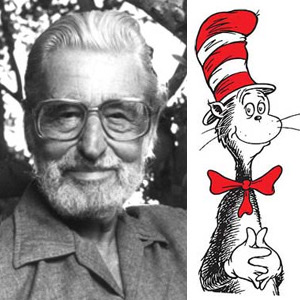
Dr. Seuss
5. “No one saves us but ourselves. No one can and no one may. We ourselves must walk the path.”
The Buddha
6. “You can influence, direct and control your own environment. You can make your life what you want it to be.”
Napoleon Hill
7. “Freedom is control in your own life.”
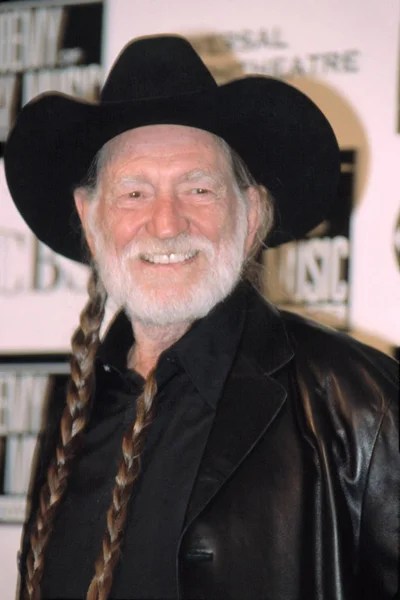
Willie Nelson
8. “Success is hastened or delayed by one’s habits. It is not your passing inspirations or brilliant ideas so much as your everyday mental habits that control your life.”
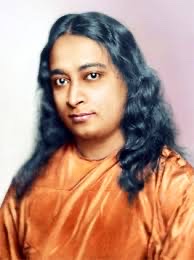
Paramahansa Yogananda
9. “My life didn’t please me, so I created my life.”
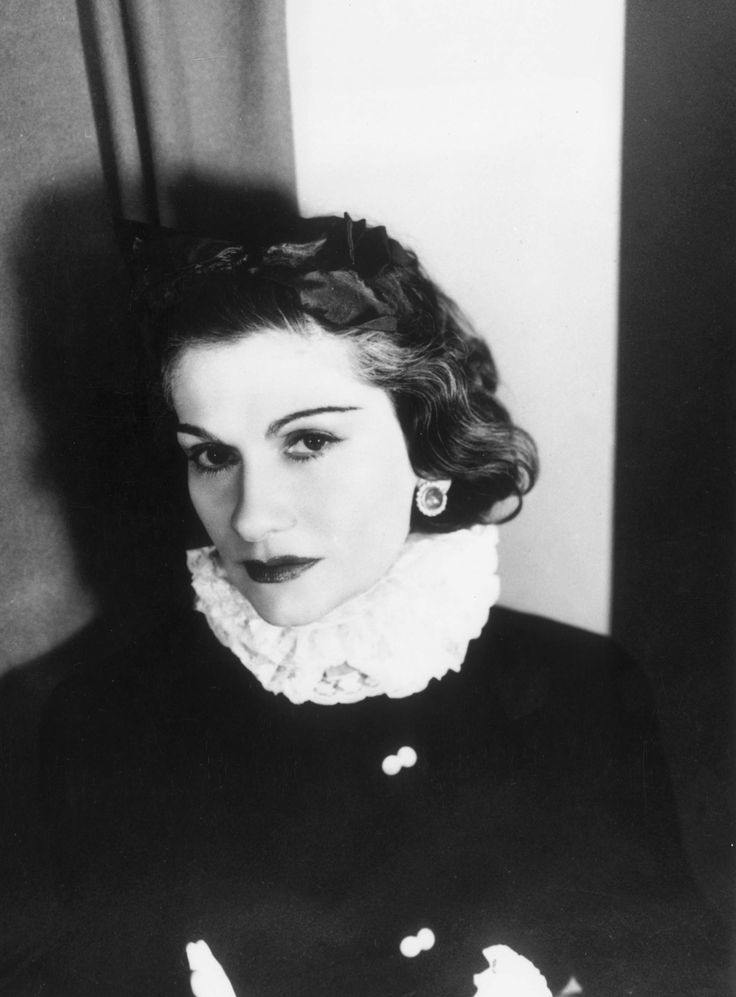
Coco Chanel
10. “Everybody thinks of changing humanity, but nobody thinks of changing himself.”
Leo Tolstoy
I.F. Jarjoura D.D.S., M.S.
Founder: Dental Care Team Group
Founder: Control “Freaks”- A group for dentists who want to smile more